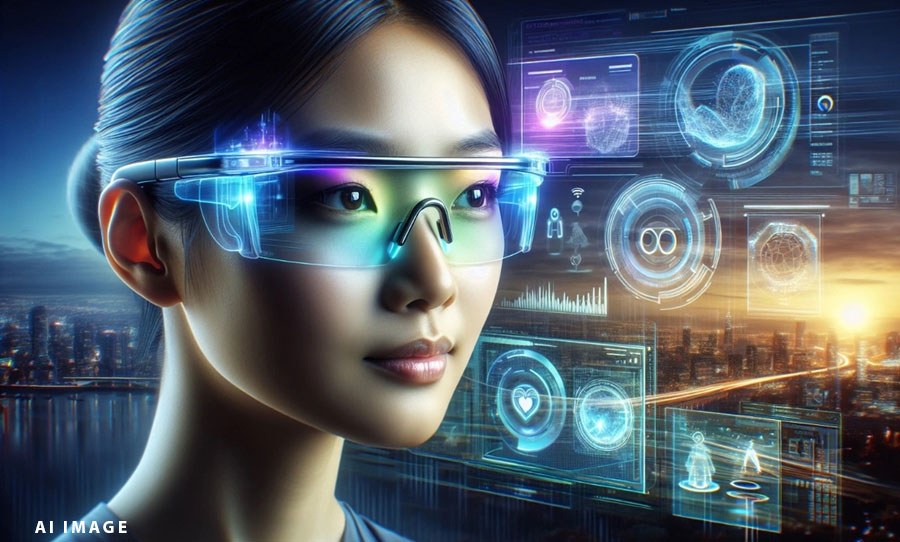
Business Computing in 2026 Technology evolves faster than we can study it. The window of relevance for new developments now runs shorter than our learning curve. Survival, not just competitive advantage, drives workplace technology adoption in a business world where disruption speeds up, and AI becomes essential.
The next decade will see these technological changes affect nearly every industry. Our research team surveyed more than 13,000 executives and found that innovative leaders already utilize data to build trust and stay ahead of the competition. More importantly, quantum computing will solve complex problems hundreds of millions of times faster than current supercomputers. AI startups now scale from $1 million to $30 million in revenue five times faster than traditional software companies did. Of course, quantum computing will move from laboratory experiments to ground applications by 2026, completely changing how businesses operate.
This piece explores the key technologies that will reshape our 2026 workplace. Technology skills remain vital as these advances fundamentally change our work locations, communication methods, and how we collaborate in an AI-powered, hyperconnected world.
Visible Shifts in Business Computing in 2026
Business automation is no longer optional – it’s something we need to do. By 2026, 30% of enterprises will automate most of their business activities. This represents a fundamental change in how work gets done.
Companies that use automation now have 22% lower costs than those that use manual processes. Additionally, businesses see strong returns—every $1 invested in automation yields $5.44. These impressive returns largely reflect companies’ ability to act faster than competitors.
AI-powered tools are reshaping the scene for traditional collaboration platforms by making them smarter and more accessible. These smart assistants take care of day-to-day tasks like scheduling meetings across time zones, managing emails, and doing simple research. AI language processing tools make communication clearer by suggesting better phrasing and even creating live meeting transcripts.
Cloud-native applications bring another big change. These apps are built to take advantage of cloud platforms’ scale, flexibility, and adaptability. Built as independent microservices in lightweight containers, they can scale up or down based on what you need.
The effect on productivity is remarkable. Studies show that employees can save 2-5 hours each day when AI systems handle administrative tasks. Teams can focus on strategic projects that need human creativity and judgment instead of spending time on routine work.
The Hidden Infrastructure Behind the Change
Powerful, evolving infrastructure supports every workplace breakthrough we see today. Quantum computing is driving these radical changes, and experts expect quantum advantage to emerge by the end of 2026. This advanced technology solves complex problems hundreds of millions of times faster than classical computers.
Cybersecurity infrastructure must keep pace. RSA and ECC encryption methods will become vulnerable to quantum-enabled attacks. Organizations face “harvest-now, decrypt-later” threats today. Adversaries store encrypted communications and wait to decrypt them when quantum capabilities mature.
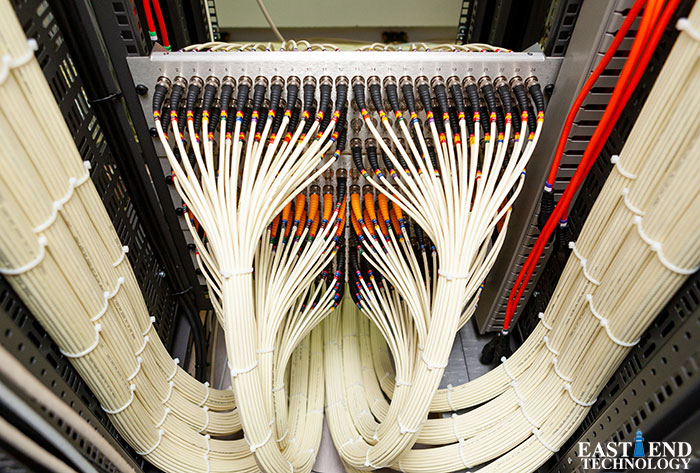
Data centers continue to revolutionize. Cloud-first approaches now give way to strategic collaborations: cloud provides elasticity, on-premises ensures consistency, and edge delivers immediacy. These changes reflect how data now spreads beyond data centers and grows at the edge.
The energy that AI systems need raises sustainability concerns. ChatGPT queries use up to 10 times more electricity than Google searches. This pushes breakthroughs in cooling systems that cut energy use by up to 40%. Companies now explore nuclear energy options to power carbon-free data centers.
Companies that want to succeed in 2026 must develop infrastructure strategies that balance performance, security, and sustainability.
How Technology Is Changing the Way We Work
AI fundamentally changes work as it evolves from an experimental technology into an essential business partner. Research shows that current technology could automate about 57% of US work hours. All the same, this doesn’t mean jobs will disappear—it points to a new way of getting work done.
Success demands bold reimagination from organizations through modular architectures, embedded governance, and continuous improvement as core capabilities. Many businesses face implementation challenges—while 38% are piloting AI agents, only 11% have deployed them in production.
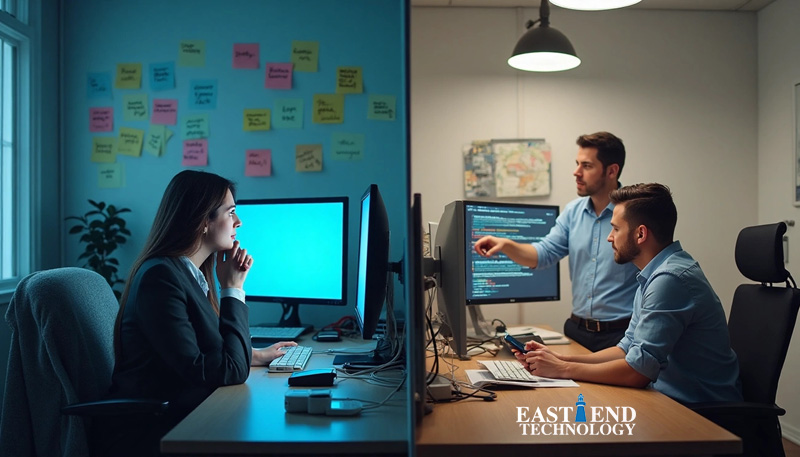
A significant 84% of large organizations acknowledge that AI can make processes efficient without eliminating employees. This insight has created a new dynamic between humans and technology, leading to hybrid teams that divide work based on their strengths. AI takes care of data-heavy and repetitive tasks, while humans concentrate on creative, strategic, and relationship-driven work.
The economic effect runs deep—organizations could unlock approximately USD 2.90 trillion in economic value by 2030 in the United States by properly redesigning workflows for human-AI collaboration.
AI will create 97 million new jobs, and AI-related positions offer substantial compensation—the median salary reached USD 160,056 in April 2024. In fact, sectors that embrace AI see nearly five times higher growth in labor productivity.
Conclusion
Business technology faces a defining moment as we approach 2026. Companies must adapt to survive in this new landscape. Those who adopt automation now operate with 22% lower costs and gain $5.44 for every dollar invested. On top of that, quantum computing will soon offer unprecedented processing power that will revolutionize data analysis in any discipline.
The workplace has begun a complete transformation. AI has evolved from an experimental tool into an indispensable business ally. Instead of replacing workers, AI creates hybrid teams where machines tackle repetitive tasks while humans concentrate on creative, strategic work. This powerful combination could generate approximately $2.90 trillion by 2030 in the United States alone.
A new infrastructure powers these visible changes. Companies now favor resilient hybrid models that balance cloud flexibility, on-premises reliability, and edge computing speed. Environmental concerns have sparked innovations in cooling systems, pushing data centers to explore cleaner energy alternatives.
Leaders must prepare their organizations today. Success demands reimagining processes, building proper infrastructure, and developing effective human-AI partnerships. Companies that hesitate risk falling behind as innovation speeds up. Successful businesses in 2026 will see these crucial technologies as transformative allies that reshape work methods. The future arrives regardless of our readiness – preparation cannot wait.
For all your Technology Needs and Questions, please contact East End Technology.
Business Computing in 2026 | Blog Article | East End Technology | All Rights Reserved. | Riverhead, NY